


Updated November 10, 2026
Short answer: Marketing follows rules much like physics. Prospects stay put until something moves them (inertia). The same effort moves a focused audience further than a broad one (F = ma). Being different attracts the right customers and repels the wrong ones (magnetism). Every extra step between the click and the call slows people down (friction). Doing more only pays off when you have enough tries and money to wait for the average (the law of large numbers). And every marketing action should produce a reaction you can measure (Newton's third law).
I studied chemical physics before I got into marketing, so I can't help seeing these laws everywhere.
When it comes to marketing, a lot of business owners act as though the laws of physics don't apply. We get it. Maybe you didn't like science class, or maybe you think marketing is all psychology.
But two of the most common marketing mistakes we see break basic physics:
🔎 Seeing something a competitor is doing and assuming it is working.
🔎 Believing that if you do more of something, it will eventually work.
Here are the six laws, and what each one means for getting more customers instead of just more clicks.
Law 1: Inertia — Prospects at Rest Stay at Rest
Newton's first law says an object at rest stays at rest, and an object in motion stays in motion, unless an outside force acts on it. Physicists call that tendency inertia (NASA Glenn Research Center).
Your prospects have inertia too. They already have a supplier, a habit, or a plan to "deal with it later." Nothing changes until something gives them a reason to move:
- A problem that just got worse (a failed inspection, a lost bid, a slow month)
- A clear cost of waiting
- A next step small enough that it feels easy
If your marketing doesn't name the problem your customer already feels, it isn't applying any force. It is just more noise.
Law 2: Force = Mass × Acceleration — Focus Beats Spreading Thin
Newton's second law is the famous one: F = ma (NASA Glenn Research Center). Flip it around, and you get a = F / m. For the same force, the bigger the mass, the less it accelerates.
In marketing terms, your force is your budget and time. When you aim it at "everyone," you are pushing a huge mass, and nothing moves very fast. Aim the same effort at one well-defined ideal customer, and it moves much further.
That is why we start with buyer personas. Before writing another post or buying another ad, answer the 32 questions for finding your ideal customer.
Personalized messaging pays off. When HubSpot analyzed more than 330,000 calls-to-action over six months, personalized CTAs converted 202% better than basic ones.
Your results will vary, but the lesson holds: a message written for one person beats a message written for no one in particular.
Law 3: Magnetism — Attract the Right Customers by Repelling the Wrong Ones
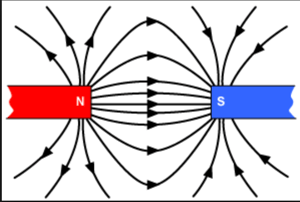 Opposite poles of a magnet attract. Like poles push each other away. You've probably seen the science-class demo: flip one magnet around, and the two go from pushing apart to snapping together.
Now look at what happens when you copy a competitor.
You see a post, an ad, or a page you like and assume it works for them. You make something similar. With good SEO, it might even rank. Then a dogpile starts: a popular topic gets more popular because everyone keeps producing content on it. Soon every company in your industry sounds the same.
The real question: did any of that bring you more customers?
A ranking is not a customer. (We wrote more about this in Why Ranking on Page One Doesn't Guarantee More Customers.) And you have no idea whether your competitor's post brought them a single sale.
Be the opposing force
In a sea of sameness, trying to look like everyone else won't help you stand out. A clear position works like a magnet. It pulls in the customers who fit you and pushes away the ones who were never going to be a good fit. That's a good thing. Repelling the wrong prospects saves your sales team time and makes your message sharper for the right ones.
Instead of selling the same product or service the same way as everyone else, tell your story:
- Why do you do what you do?
- What led you to the services you offer?
- How are you different, and who is that difference for?
Tell your story.
Your competitors can copy your service list. They can't copy your story.

Law 4: Friction — Every Extra Step Slows the Sale
Friction is the force that slows things down when two surfaces rub together. In marketing, friction is everything between "I'm interested" and "I just called you":
- A phone number that isn't clickable on a phone
- A contact form with 12 required fields
- A "request a quote" page that loads slowly or breaks on mobile
- Calls that go to voicemail with no callback for two days
- No way to tell which marketing produced the call
You can spend a lot of force pushing people toward your website and lose them all to friction in the last step. Before you buy more traffic, walk through your own site as a customer would. Fill out the form. Call the number. Then make sure every call and form is tracked, because service businesses have to measure and report calls to know what's working.
Law 5: The Law of Large Numbers — "Do More" Only Works If You Can Afford It
There is some science behind the "just do more" idea. In statistics, the law of large numbers says that as you repeat something more times, the average result gets closer to the true average.
Toss a coin enough times, and the share of heads will get close to 50%. Notice what that doesn't promise. It doesn't promise the number of heads and tails will even out. It doesn't promise it'll happen quickly, either. According to Britannica, it takes more than 1,000 tosses to have a 95% chance that the share of heads lands between 47% and 53%.
Marketing works the same way. If you had unlimited money and time, doing more of the same would eventually show you its true average result.
But most businesses don't have unlimited resources.
The companies we work with have a set budget and want a clear return on it.
That leads to two practical rules:
- Don't scale something that hasn't proven itself. Get a page, ad, or email converting well first. Then send more traffic to it.
- Don't judge on a tiny sample. Two weeks of data, or five leads, tells you very little. Decide ahead of time how much data you'll collect before calling something a win or a loss.
Law 6: Action and Reaction — Every Marketing Action Needs a Measurable Result
Newton's third law says that for every action, there is an equal and opposite reaction (NASA Glenn Research Center). Marketing isn't quite that tidy. Still, every action you take should produce a reaction you can see in your data. If you can't measure the reaction, you can't tell whether the action was worth it.
It's easy to get caught up in the marketing hype online. Everyone has the magic fix for all your problems. Don't get caught up in the euphoria. Before trying 20 different things, step back and decide what matters most to your business. Pick one clear objective that everyone can understand. Then:
✓ Clearly define what success looks like. (Example: more qualified quote requests, not more website visits.)
✓ Choose one specific metric that measures that success. (Example: form submissions and tracked calls from organic search.)
✓ Set a defined time to measure. (Example: 90 days, long enough to collect a real sample.)
✓ Analyze the data to see whether you succeeded.
If you hit your goal, move on to improving another area. If you didn't, figure out what needs to change. Doing more of the same will not change your results.
That loop of plan, act, measure, and adjust is the heart of PDCA: The 4 Steps of Effective Marketing. When you review the results, watch out for the placebo effect of graphs and charts.
Frequently Asked Questions
What is the physics of marketing?
It means using simple laws of physics to explain how marketing behaves. Prospects resist change until something moves them (inertia). Focused effort moves people further than scattered effort (F = ma). A clear position attracts some buyers and repels others (magnetism). Extra steps slow sales down (friction). And results only settle near their average after enough tries (the law of large numbers).
Why doesn't copying a competitor's marketing work?
You can see what a competitor publishes, but not whether it brings them customers. Copying also makes you sound like everyone else, which removes the reason to pick you. Tell your own story and test it against your own goals.
Will doing more marketing eventually get results?
Sometimes, but only with enough budget and patience to collect a large sample. Most businesses get a better return by proving one message or channel converts, then scaling it.
How do I know if my marketing is working?
Define success in terms of customers, not clicks. Pick one metric, set a time frame, and compare the results to your goal. Our guide How Do I Know If My Marketing Is Working? walks through it.
Need help figuring out which of these laws is slowing your marketing down? Schedule a time to talk with Phil.