

How to Get More RFQs on Your Manufacturing Website
(And Where Your RFQ Button Should Live)
If you manufacture custom parts, assemblies, or engineered components, RFQs are gold. They’re the first real signal that a prospect is ready to talk pricing, timelines, and production capacity.
Yet many manufacturing websites treat RFQs as an afterthought, burying contact links or relying on generic “Contact Us” forms that fail to convert.
In this post, you’ll learn how to turn your manufacturing site into an RFQ‑generating engine, with a special focus on RFQ button placement, sticky “Request a Quote” CTAs, and user-centric design that turns visitors into qualified quote requests.
Turn Your Manufacturing Website into an RFQ Machine
An effective manufacturing website does more than list capabilities—it guides technical buyers into the quoting funnel. Engineers and procurement specialists land on process pages, materials documentation, and case studies to validate whether you can handle their project.
The next logical step? Requesting a quote.
To get more RFQs, every page should answer three questions:
- Can you produce this part or assembly?
- What are your tolerances, lead times, and quality standards?
- How do I start a quote in minutes?
RFQs, or request for quotes, grow when your site is built to convert intent into action, not just show information.
Why You Need a “Request a Quote” Button
Manufacturers often rely on:
- A small “Contact Us” link in the footer
- A generic email address in the header
- A vague “Talk to sales” button with no clear outcome
These are too passive for buyers who already know what they want.
A dedicated “Request a Quote” button signals that you’re ready to quote, not just field inquiries. It:
- Sets clear expectations (they’re starting a quotation process)
- Reduces friction (no hunting for contact info)
- Increases RFQ conversion because the micro‑intent of the visitor is matched with a macro‑CTA
This is especially important for industrial buyers, contract manufacturing clients, and OEM partners who expect fast, professional quoting experiences.
RFQ Buttons and Sticky Menus: The Hidden Opportunity
If your website has a sticky header or fixed navigation, you’re already in a powerful position—but only if you use it strategically.
A sticky header is a navigation bar that remains visible as the user scrolls down the page. It’s especially useful for:
- Product pages
- Technical capabilities pages
- Blog articles and case studies
When a buyer lands on a custom machining page, scrolls through tolerances and materials, and then decides to quote, they shouldn’t have to scroll back to the top to find a way to request a quote. If the RFQ button disappears, they might abandon the action.
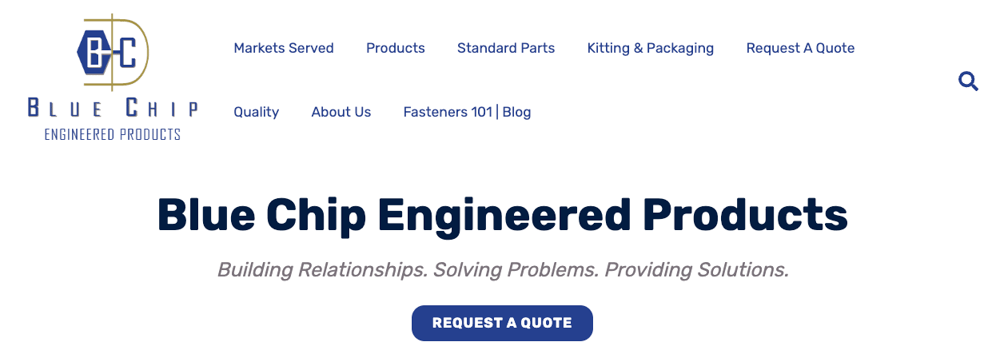
That’s why your sticky menu should include a primary “Request a Quote” button (or “Get a Quote”) that’s:
- Always visible, even as the user scrolls
- Consistent across every page (same color, style, and placement)
- High‑contrast so it stands out from secondary navigation items
This single placement can dramatically increase RFQs because it meets the buyer at the exact moment of intent—mid‑scroll on a technical page.
Strategic RFQ Button Placement on Your Manufacturing Website
Effective RFQ generation is less about having a button and more about where that button lives. Here’s how to place your RFQ buttons for maximum impact.
Above the Fold: The Hero RFQ Button
The hero section at the top of your homepage is prime real estate. Place a clear “Request a Quote” button here so visitors see it immediately upon landing.
Pair the button with a short value statement, such as:
- “Get a fast quote for precision CNC machining”
- “Request a quote for custom fabrication”
This above‑the‑fold CTA serves as your main entry point for RFQs from traffic sources like SEO, Google Ads, and social media.
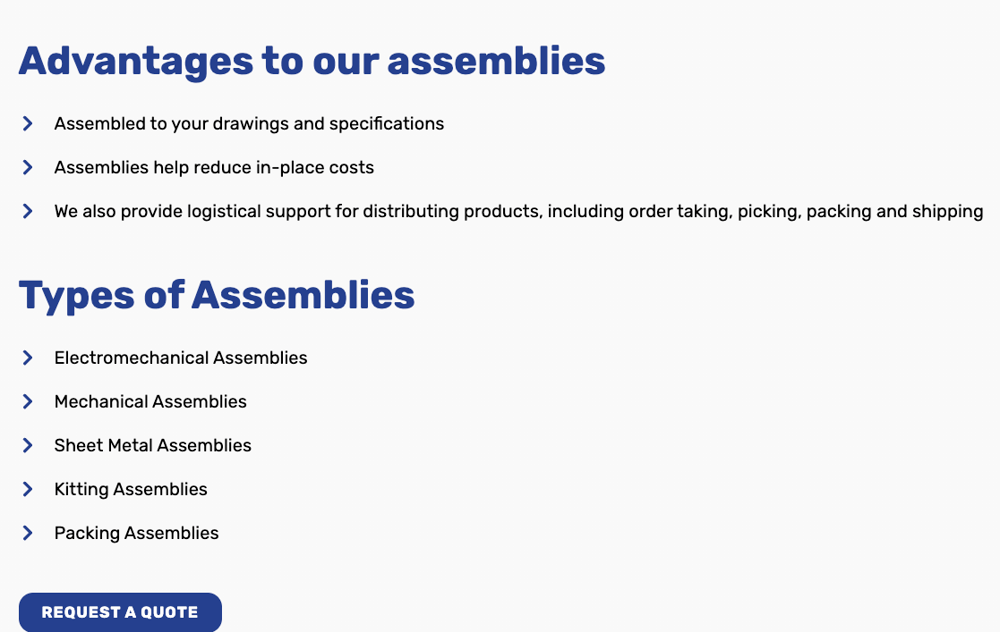
On Product and Capability Pages
Buyers who land on pages like:
- CNC machining services
- Injection molding capabilities
- Sheet metal fabrication
are already in a high‑intent mindset. They’re comparing vendors and evaluating whether you can produce their specific part.
On these pages, place a page‑specific RFQ button close to the headline or first section. For example:
- “Request a quote for CNC milling”
- “Get a quote for low‑volume production”
This ties the RFQ to the specific capability they’re evaluating, making the quote feel more relevant and actionable.
Within Content Sections (After Key Value)
Technical buyers often read through multiple sections before deciding to quote. If they’re reading:
- Tolerance guides
- Material specifications
- Case studies or success stories
they’re demonstrating strong interest. That’s where secondary RFQ buttons work best.
Place a “Request a Quote” or “Get a Quote for Your Project” button after key sections. This pattern:
- Reinforces the path to quotation
- Capitalizes on the momentum of the content
- Aligns with natural reading patterns and buyer journeys
Using directional cues (arrows, icons, or colored text blocks) can further guide the eye toward the RFQ button.
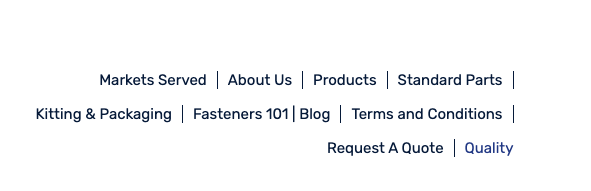
In the Footer as a Safety‑Net CTA
Even if a visitor doesn’t see the RFQ button earlier, the footer is a safety‑net location. Place a “Request a Quote” CTA in the footer of every page so:
- Mobile users who scroll to the bottom can still take action
- Visitors who skim the page can find a clear next step
- Team members who share the link internally can quickly initiate a quote
A footer RFQ button complements the other placements but shouldn’t be the only one.
Practices for RFQ Buttons
Placement matters, but button design and behavior also influence whether visitors click.
- Use clear, action‑oriented labels like “Request a Quote” or “Get a Quote” instead of generic “Submit” buttons until the very last step of the form.
- Choose high‑contrast colors so the button stands out from the background (e.g., a bright color for primary RFQ CTAs).
- Size the button for thumbs—especially on mobile—so it’s easy to tap without zooming.
- Align the button with natural reading patterns, typically left or center, not far to the right or hidden in a sidebar.
These small UX tweaks can significantly improve the RFQ conversion rate on your manufacturing site.
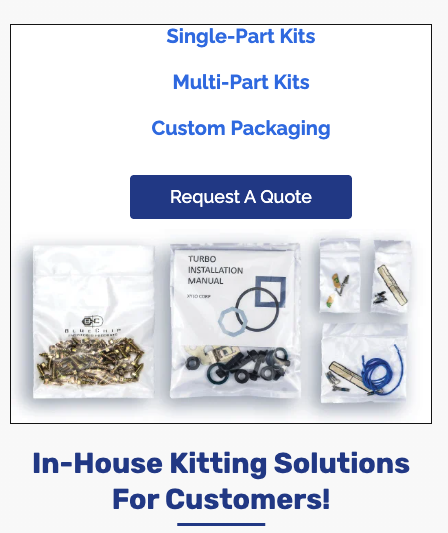
Pairing RFQ Buttons with Micro‑CTAs
Before a buyer is ready to submit a full RFQ, they often want to gather more information. That’s where micro‑CTAs like:
- “Download our capabilities PDF”
- “Watch our machining process video”
- “View case studies in your industry”
come into play. These micro‑CTAs help build trust and educate the buyer.
After the micro‑CTA, place a bigger RFQ CTA. For example:
- “Download our tolerance guide”
- “Request a quote for your custom part”
This pattern respects the buyer’s journey: they learn first, then move to quote. It’s a proven way to increase RFQs from content‑driven visitors such as engineers and procurement managers.
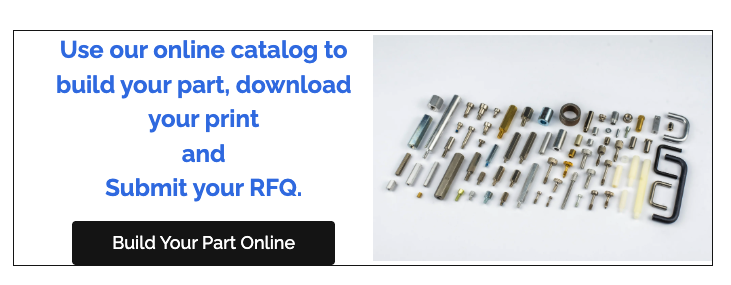
Tracking and Optimizing RFQ Conversion
To grow RFQ volume, you must know where and how your RFQ buttons are performing. Here’s how to track them effectively.
- Set up RFQ submission events in Google Analytics (GA4) or your preferred analytics platform. Tag every form submission as an RFQ event (e.g., “RFQ_Submission”).
- Track button clicks (e.g., “RFQ_Button_Click”) to see which placements drive the most engagement.
- Segment by page to see which capability or product pages generate the most RFQs.
Use this data to:
- Double down on high‑performing pages
- A/B test button labels, colors, and positions
- Optimize your sticky‑header RFQ button versus inline buttons
Continuous optimization based on data is what separates good manufacturing websites from RFQ‑driving lead machines.

How Analytics That Profit Can Help You Get More RFQs
If you’re like most manufacturing companies, you’re investing in:
- SEO and content to attract buyers
- Technical pages and case studies to build trust
- Online forms to capture RFQs
But your RFQ numbers still feel low. That’s where Analytics That Profit can help.
We specialize in data‑driven SEO and digital marketing strategies for manufacturers, focusing on measurable outcomes like:
- More RFQs from your website
- Higher‑quality leads aligned with your ideal customer profile
- Optimized user journeys that turn content into quotes
By analyzing your existing site structure, RFQ funnel, and buyer behavior, we can pinpoint exactly where your RFQ buttons should live—and how to make them convert.

Schedule a Meeting with Analytics That Profit
Ready to get more RFQs from your manufacturing website and turn your sticky menu into a 24/7 quoting engine?
Schedule a meeting with Analytics That Profit today. In that session, we’ll review your current RFQ flow, identify underperforming CTAs, and show you how a few strategic tweaks can significantly increase the number of qualified RFQs landing in your inbox.
Book your meeting now and start turning technical visits into real manufacturing quotes.